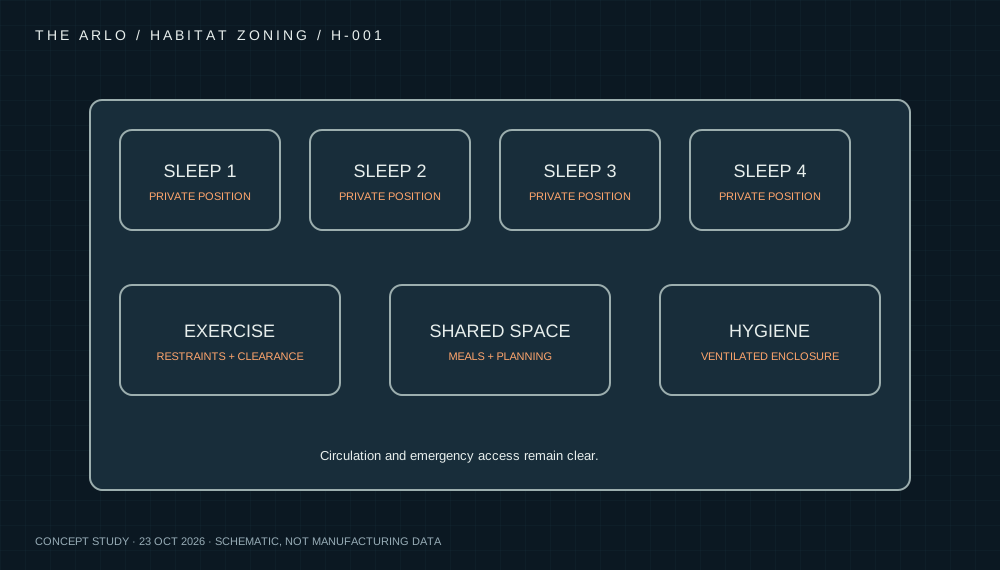
Four people, many competing needs
The reference habitat provides four private sleep positions, a shared meal and planning area, hygiene facilities and dedicated exercise accommodation. Acoustic isolation, lighting schedules and ventilation near the sleeping positions need verification. A space that looks generous in an illustration can become unusable once restraints, spares and emergency equipment are installed.
Design for the workday
Crew time is a finite station resource. Allocate maintenance, housekeeping, exercise, medical checks, communications and emergency drills before selling research hours. Tasks should be tested in representative mockups with gloves and restrained tools where relevant. Stowage locations need inventory control and should not block access to isolation valves or hatches.
A window is a structural decision
A modest observation window or later cupola can support Earth observation and crew experience, but glazing adds pressure-boundary, thermal, debris and inspection requirements. The first mission should not depend on a large panoramic window. Exterior shutters and protected viewing arrangements remain trade studies.
Emergency care and return
The medical concept must connect crew selection, training, onboard capability, communications and evacuation. The station needs a suitable return seat for every occupant throughout the occupied mission, with vehicle endurance and departure constraints assessed. A docked capsule is necessary in this concept but is not by itself a complete rescue plan.
Research basis / reviewed 23 October 2026
Sources establish engineering context, not ARLO performance. Numerical allocations are our provisional study assumptions. Images are concept art; diagrams and animations are explanatory.
NEXT CHAPTER