ARLO / ACTIVE SHIELDING / CONCEPT RESEARCH

Shape the surface. Measure the interaction.

Connect MatterVolt optical boundary research to spacecraft surface and thermal studies without confusing optics with cosmic-ray shielding.

Explore the research ↓
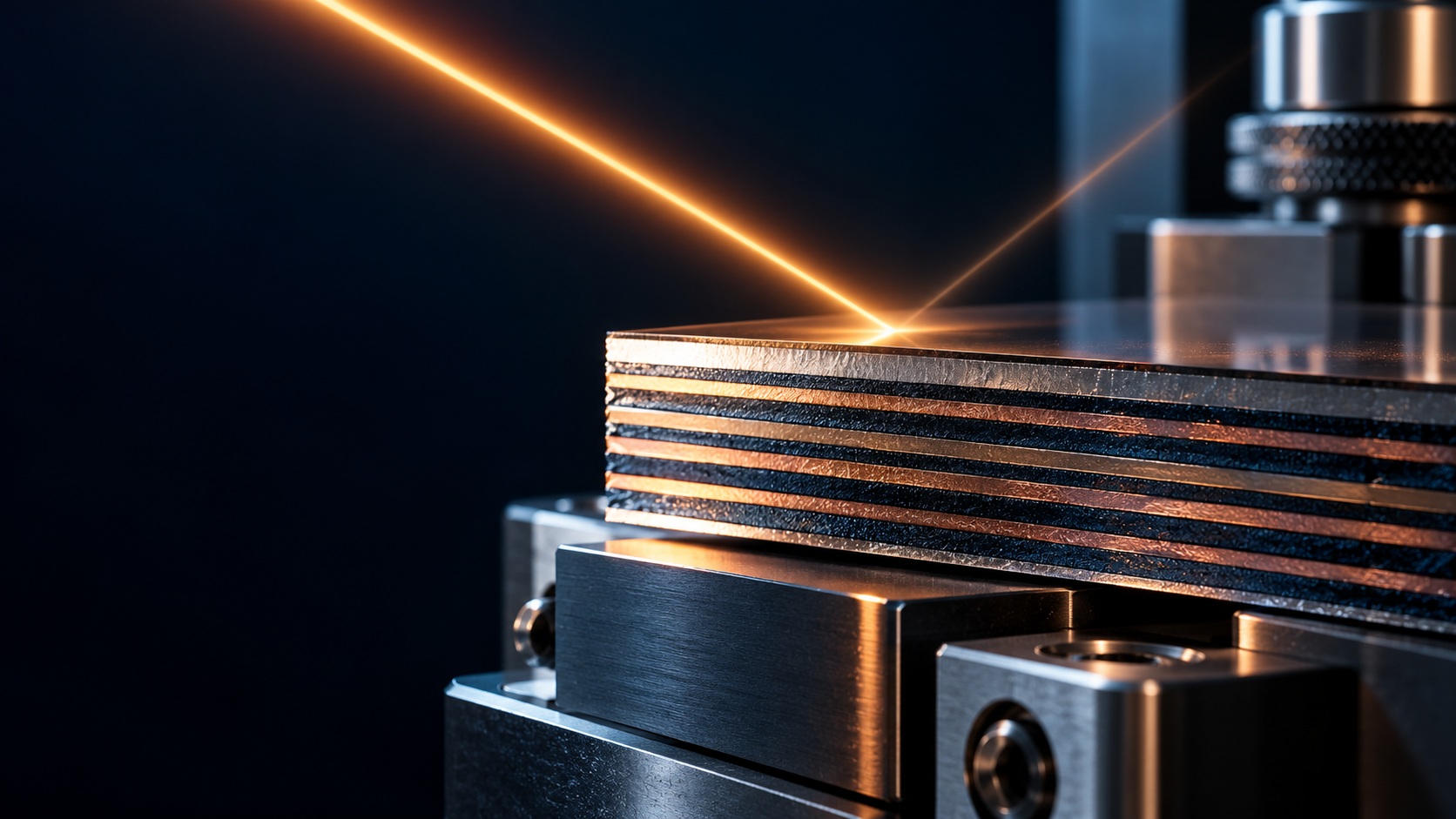
AI-generated surface research concept; not built hardware
Concept visualization · not a field solution or built hardware
Current evidenceLiterature + analytical modelNo measured ARLO shielding benefit
01

What can transfer

MatterVolt’s boundary research motivates testing how geometry and material layers change reflection, transmission and absorption over defined wavelength bands. For ARLO, the proposed application is surface and thermal management research. It is not evidence that a nanostructure blocks energetic ions or creates a macroscopic protective force field.

02

What our previous calculations taught us

The prior computational work distinguished forces on a sample from forces on the complete assembly. Closing the boundary around source and beam catchers removed the apparent internal-only thrust. It also showed that the substrate and surrounding layers can materially alter a predicted optical signal. These are modeling lessons, not station measurements; numerical audit values are not republished here without their current source package.

03

Design the complete coupon

Specify layer materials and thicknesses, substrate, backside, surface roughness, temperature and illumination bandwidth. Measure angular and spectral reflection, transmission and absorption, then measure thermal emission under the relevant conditions. An optical resonance is not a broadband thermal-control result.

04

The proposed bridge experiment

Compare an engineered coupon with a matched plain reference. Change one declared geometric feature at a time, repeat across independently fabricated samples, and track drift and calibration. Follow optical testing with vacuum and environmental durability assessment before considering a station panel.

05

Two channels, two validation paths

Magnetic deflection is a charged-particle transport problem. Surface response is an electromagnetic and thermal problem. They may share mechanical and thermal interfaces, but success in one channel does not validate the other. MatterVolt’s live site could not be retrieved in this review; this page describes a proposed transfer based on prior project context, not a fresh audit of its dataset.

Research foundations

External work informs the study; it does not validate ARLO. Review date: 24 October 2026. Source access depth is stated below.

  1. NASA MAARSS engineering study, 2019 ↗

    Architecture, structural loads, quench protection and cooling; report summary reviewed.

  2. CREW HaT, Desiati & D’Onghia, 2022 ↗

    Preliminary magnetic habitat concept; abstract reviewed, not flight validation.

  3. Hesse-Withbroe & Arquilla, 2025 ↗

    Modeling preprint; revised strong-field performance. Abstract reviewed.

  4. NASA LEO station radiation environment, 2024 ↗

    Orbit-specific environment reference; presentation.

  5. NASA thermal-control overview ↗

    Engineering context for coatings, heat rejection and environment.

  6. ESA spacecraft impact shielding ↗

    Physical debris protection remains a separate system.

  7. NASA spacecraft power systems ↗

    Solar generation, eclipse storage and end-of-life considerations; overview reviewed.

FOLLOW THE DESIGN

Explore the next question.

ARLO active shielding researchExplore magnetic radiation shielding, MatterVolt surface research and a staged protection study for the ARLO station.Explore ↗How magnetic radiation shielding worksUnderstand magnetic rigidity, particle energy, field direction and why a magnetic field is not a universal barrier.Explore ↗ARLO radiation environment and protection tradeCompare low Earth orbit radiation hazards with deep-space shielding concepts before sizing an ARLO protection system.Explore ↗ARLO superconducting shield concept designStudy candidate coil layouts, cryogenic loads, quench protection, docking access and passive shielding for ARLO.Explore ↗ARLO shielding validation and evidence gatesA staged validation plan for magnetic radiation shielding and MatterVolt surface concepts, from baseline models to independent review.Explore ↗Proton magnetic rigidity calculatorCalculate relativistic proton rigidity and uniform-field curvature radius. Educational tool, not a radiation dose or shield-design calculator.Explore ↗Solar power for ARLO magnetic shieldingExplore the solar arrays, batteries and cooling needed for an ARLO magnetic-shield concept. Adjust a transparent preliminary power budget.Explore ↗ARLO magnet cooling and radiator designSeparate magnet heat leakage, cryocooler electricity and warm-end radiator rejection in the ARLO shielding concept.Explore ↗ARLO magnetic shield eclipse and failure operationsPlan battery reserve, magnet energization, cooldown and fault handling for a solar-powered ARLO shielding study.Explore ↗

Help test the protection concept.

We are defining a research scope for radiation transport, superconducting engineering and optical-material testing. No shield is offered for sale or operational use.
Discuss a technical contribution ↗Return to ARLO ↗